
Medically Reviewed by Dr. Anilkumar Bellad, General Surgery
Written by KIE Editorial Contributors
3.5 min read | Published On: 15-10-2025
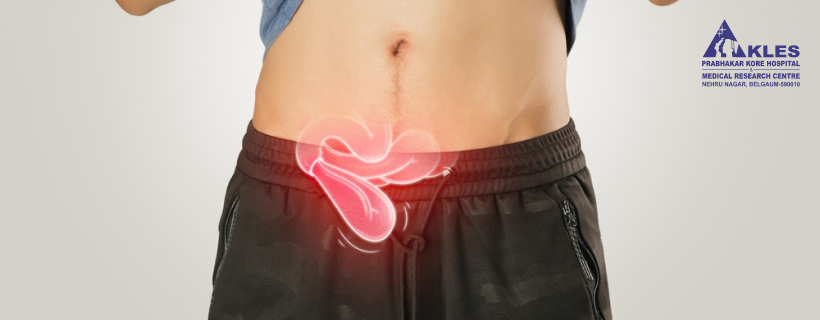
A femoral hernia happens when tissue or fat from inside the belly pushes through a small tunnel called the femoral canal. This canal lies near the upper thigh and carries blood vessels to the leg. If the canal weakens, the belly contents may bulge out, forming a lump. Small femoral hernias often cause no symptoms at first. But if the hernia gets stuck or strangled, it can cause severe pain or block the intestines.
Symptoms depend on the size and severity of the hernia. Early on, many people do not notice a lump or feel pain. As it grows, symptoms get clearer, especially when standing or straining. Common signs include:
A strangulated hernia is urgent. It cuts off blood flow to the intestines. Seek immediate medical help if you feel severe pain, fever, or vomiting.
Femoral hernias happen when weak muscles in the lower belly combine with extra pressure inside the abdomen. Common causes and risks include:
Women, especially over 50, get femoral hernias more often due to body differences.
Doctors check for a lump in the upper thigh or groin by feeling the area. If the lump is not visible, imaging tests like ultrasound, CT scan, or MRI may be used. Ultrasound is often the first test because it shows the hernia clearly and tells it apart from other lumps.
Femoral hernias don’t heal on their own. Surgery is usually needed to fix the weak spot and stop problems. Options include:
After surgery, avoid heavy lifting and keep a healthy weight to prevent the hernia from returning.
See a doctor if you notice any bulge or swelling near the upper thigh or groin. This is especially important if it grows when you stand, cough, or lift. Go to the emergency room right away if you have sudden pain, nausea, vomiting, or a painful, discolored lump. These signs mean the hernia may be strangulated and needs urgent surgery.
Recovery time varies. Most people can do light activities within a week after laparoscopic surgery. Open surgery recovery may take 2 to 3 weeks. Follow up with your doctor, maintain a healthy weight, and avoid straining to keep the hernia from coming back.
You can reduce your risk by:
With quick diagnosis and proper surgery, femoral hernias can be safely treated. Early surgery avoids serious problems like strangulation and allows full recovery. Regular medical checkups and healthy habits help prevent the hernia from returning.
Get in Touch with a Doctor
Yes. A femoral hernia can sometimes press on nearby nerves or blood vessels, leading to discomfort or pain in the upper thigh or leg. The pain may worsen when standing, walking, or lifting heavy objects.
A femoral hernia often appears as a small, round bulge near the upper thigh or groin that may become more visible when coughing or straining. However, only a doctor can confirm it through a physical exam or imaging tests like an ultrasound.
No, leaving a femoral hernia untreated can be dangerous. It may lead to complications such as strangulation, where the blood supply to the trapped intestine is cut off. This is a medical emergency requiring immediate surgery.
Exercise cannot repair a femoral hernia once it has developed. However, gentle physical activity and core strengthening can help prevent hernias from returning after surgery by keeping abdominal muscles strong.
Femoral hernia surgery has a very high success rate, with most patients recovering fully and experiencing no recurrence. Laparoscopic techniques further reduce pain, scarring, and recovery time compared to traditional open surgery.

 1099
1099